2026
KS-CFA: Control-Flow Attestation via Symbolic Replay Against Control-Flow Bending Attacks
Zhanyu Sha, Konstantinos Markantonakis, Carlton Shepherd, Amir Rafi
Preprint

Professor of Information Security at Royal Holloway, University of London, and Director of the Trustworthy, Embedded and Autonomous Systems Centre (TASC).
Approach
Information Security systems that are sound in theory still fail in practice, because an adversary will target the weakest and most accessible part of a system — ordinarily the implementation rather than the proof.
Bridging that gap has been a central focus of my work since 1998: smart cards and RFIDs, IoT and embedded platforms, mobile handsets, trusted execution environments, smart contracts, avionics and drones, cyber-physical interfaces, and cloud execution environments. More recently my group has worked on memory-controller and micro-architectural attacks, automated fuzzing for ARM IoT devices, control-flow attestation, mobile phone forensics, and the protection of AI models and data on embedded and distributed platforms.
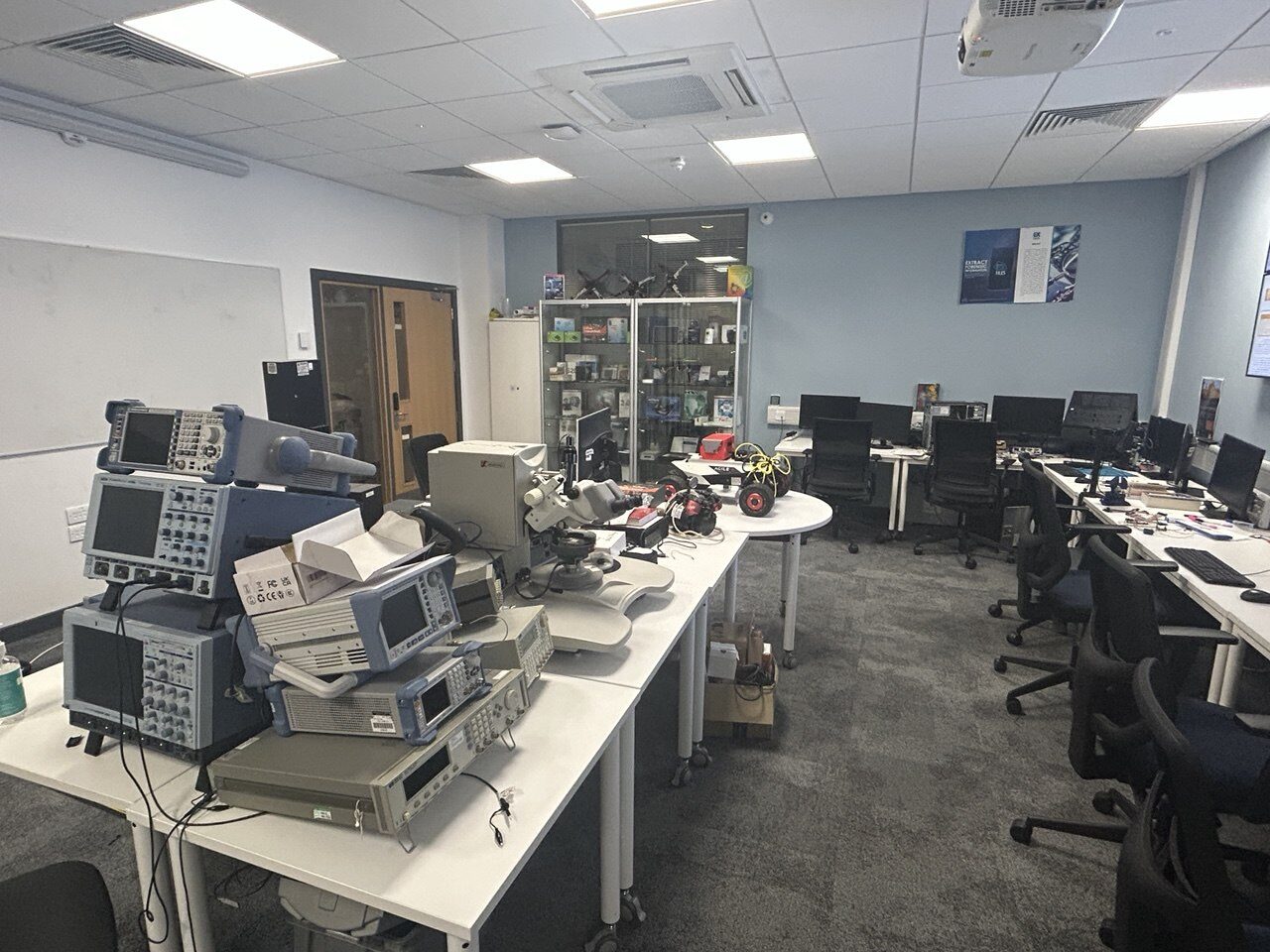
Research
My research explores how trusted computing and secure system architectures can protect connected, embedded and AI-enabled systems.
Trusted execution environments, platform attestation and hardware-supported protection for sensitive applications, data and AI workloads — smart cards, Intel SGX, ARM TrustZone, AMD SEV and Trusted Platform Modules.
Protecting AI models, data and decision-making in embedded, autonomous and distributed environments, including trusted execution, secure deployment and privacy-preserving collaborative learning.
Security architectures for embedded, connected and autonomous platforms, including AI-enabled intrusion detection, in-vehicle networks, ECU security and over-the-air update integrity.
Trustworthy operation of systems that use AI to sense, decide and act — integrity, resilience and verifiable execution across vehicles, unmanned aircraft and industrial control.
Verifying that a platform is in a known state before anything sensitive happens — including control-flow attestation, which checks runtime behaviour rather than just the boot image.
Flight controller integrity, ground station security, GPS spoofing and jamming countermeasures, and attestation built to the constraints of airborne embedded hardware.
Android and iOS security architectures, secure element integration, sensor-based covert channels, and the DRM systems that protect commercial media on five billion handsets.
EMV and contactless payment protocols, tokenisation, relay-attack detection using ambient sensors, and the ticketing infrastructure that moves cities.
Profiles
Recent publications
The most recent work.
Zhanyu Sha, Konstantinos Markantonakis, Carlton Shepherd, Amir Rafi
Preprint
Amir Rafi, Konstantinos Markantonakis, Hamza Rafi, Carlton Shepherd, Zhanyu Sha
8th IEEE International Conference on Signal Processing and Information Security (ICSPIS 2025)
Zhanyu Sha, Carlton Shepherd, Amir Rafi, Konstantinos Markantonakis
Computers & Security, vol. 150, art. 104254
Carlton Shepherd, Jan Kalbantner, Benjamin Semal, Konstantinos Markantonakis
IEEE Transactions on Dependable and Secure Computing, vol. 21, no. 4
Konstantinos Markantonakis, Ghada Arfaoui, Sarah Abu Ghazalah, Carlton Shepherd, Raja Naeem Akram, Damien Sauveron
Smart Cities, vol. 7, no. 5, pp. 2887–2909
Amir Rafi, Carlton Shepherd, Konstantinos Markantonakis
22nd IEEE International Conference on Trust, Security and Privacy in Computing and Communications (TrustCom 2023)
Books
A body of work spanning nearly two decades, charting the evolution of secure computing from multi-application smart cards to today’s trusted execution environments.
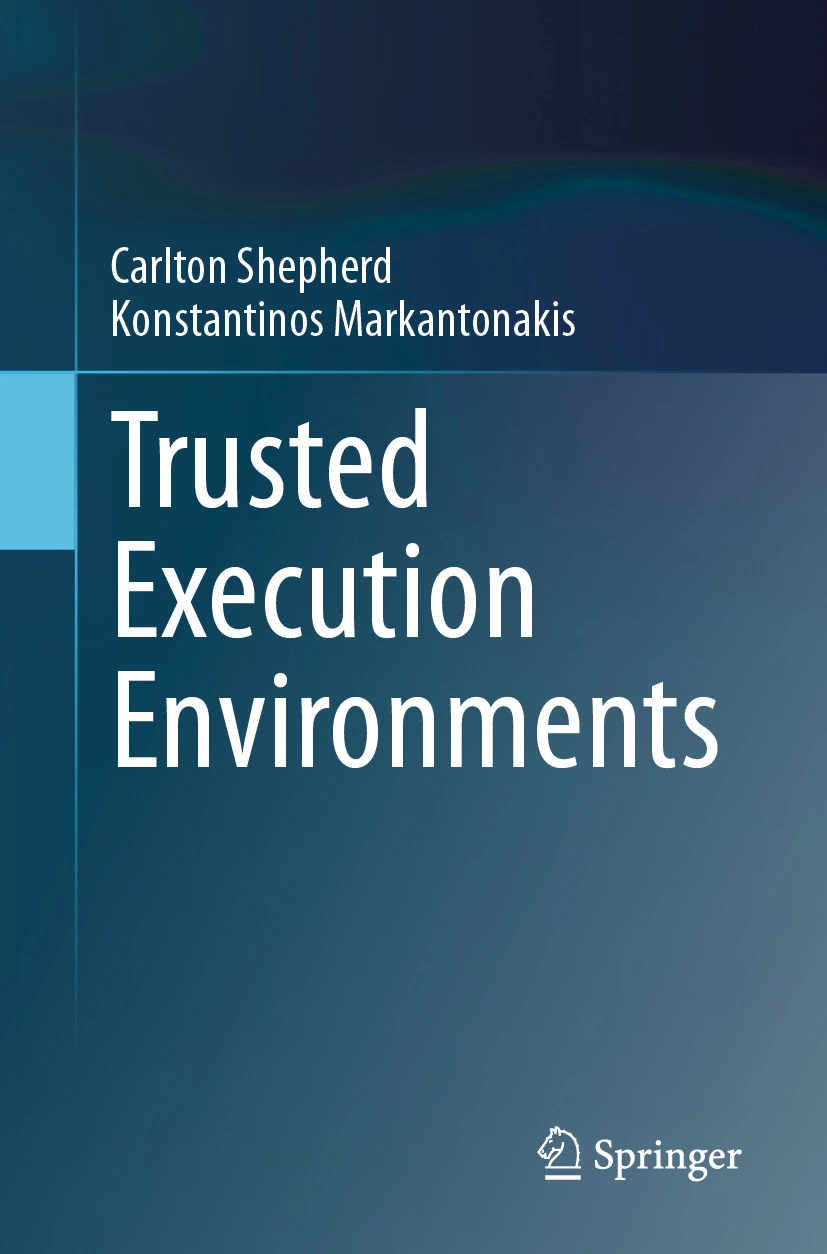
2024
Carlton Shepherd and Konstantinos Markantonakis
ISBN 978-3-031-55560-2
Springer
2017
Keith Mayes and Konstantinos Markantonakis (eds.) — second edition
ISBN 978-3-319-50498-8
Springer
2014
Konstantinos Markantonakis and Keith Mayes (eds.)
ISBN 978-1-4614-7914-7
Springer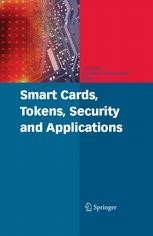
2008
Keith E. Mayes and Konstantinos Markantonakis (eds.) — first edition
ISBN 978-0-387-72197-2
SpringerSupervision
I supervise doctoral students on trusted execution environments, payment system security, automotive and embedded systems security, resilient embedded sensors, AI and cloud execution attacks and countermeasures. This work increasingly turns on protecting AI models, data and decisions on the devices and platforms where they run. I have supervised more than 17 doctorates through to completion since 2004.
I am always interested in hearing from strong candidates with a background in computer science, information security, electronic engineering or computer engineering. Practical competence — particularly in software development — is especially valued, alongside a strong interest in systems security and trusted computing.
News
Papers, awards, disclosures and appointments.