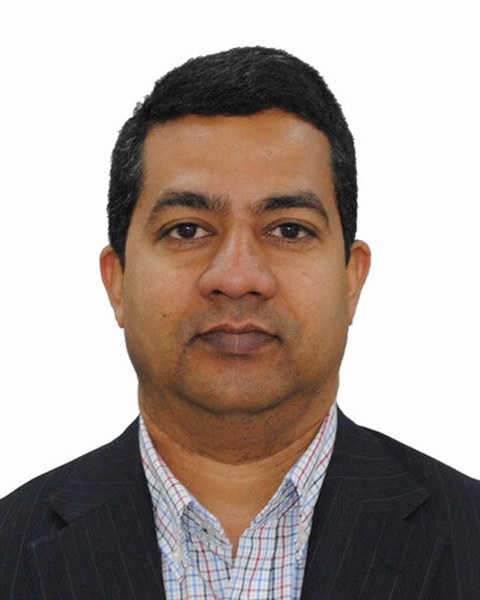
K. MarkantonakisInformation Security Group, Royal Holloway
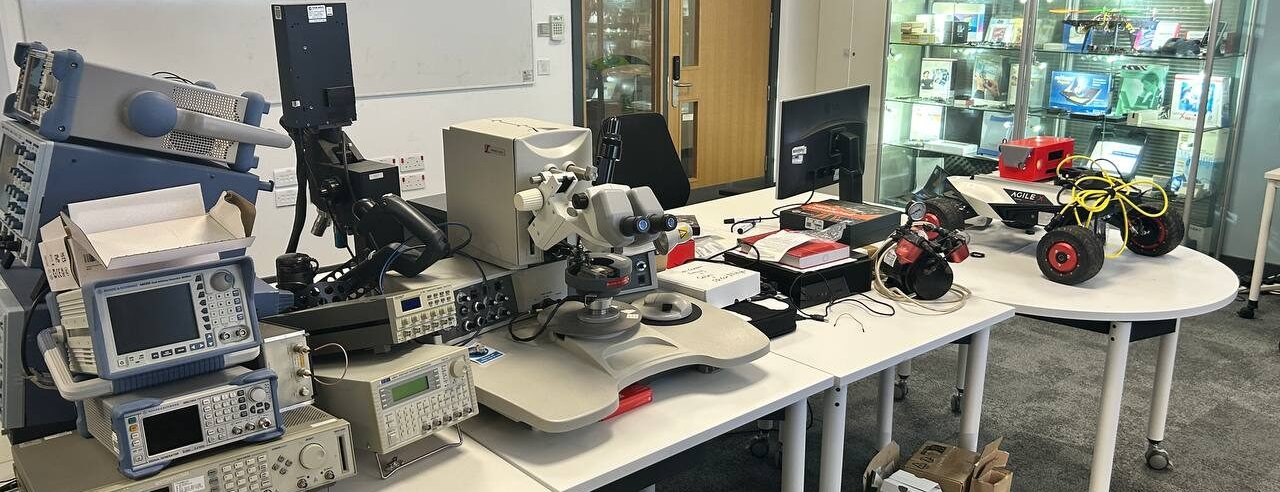
Microscope and robotic platforms in the centre’s laboratory

Home  /  Supervision

Supervision

Doctoral students in progress and completed since 2004, on trusted execution environments, payment security, embedded and automotive systems, and cloud execution attacks.

In progress

Current doctoral students

Nicola Bates

Nicola Bates

Cyber deterrence and strategic effect

Nicola is a student in the Centre for Doctoral Training in Cyber Security for the Everyday, co-supervised with the Department of Politics and International Relations. She read natural sciences (physics) at Cambridge and holds an MSc in Information Security from Royal Holloway; she is also a chartered accountant and a Teach First qualified teacher. Her research applies systems thinking and decision science to below-threshold cyber activity and its cumulative strategic effect.


Amir Rafi

Media broadcasting and DRM security

Amir is a student in the Centre for Doctoral Training in Cyber Security for the Everyday. He holds a BSc in Computing from Queen Mary, University of London and an MSc in Information Security from Royal Holloway. Before his PhD he was a research assistant on the EU Horizon 2020 EXFILES project. His TrustCom 2023 paper was the first domain-specific security evaluation of mobile DRM systems, covering Widevine, FairPlay and PlayReady.

Zhanyu Sha

Zhanyu Sha

Control-flow attestation

Zhanyu holds an MSc in Cyber Security from King’s College London. He works on software security, trusted execution environments and embedded systems security. His survey of control-flow attestation in Computers & Security examined more than thirty schemes published between 2016 and 2024, and was the first comprehensive review in the field.

Makarand Karanjalkar

Makarand Karanjalkar

Behavioural threat intelligence

Makarand joined in 2026 after more than two decades working in telecommunications and cyber security as a professional and an entrepreneur. His research develops a Behavioural Intelligence Information Model and a federated framework for sharing behavioural threat intelligence across IT, operational technology, IoT, cloud and cyber-physical systems, with the aim of detecting multi-stage, cross-domain attacks and supporting AI-driven autonomous cyber defence.

Completed

Doctorates awarded

Students who have completed their doctorate under my supervision, with the date of successful completion. Several now hold academic posts; others lead security teams in industry or have founded companies of their own.

I have also acted as adviser to Martin Kelly, Lishoy Francis, Graham Hilly and Zeeshan Bilal.

  • Jan Kalbantner2024
  • Benjamin SemalJuly 2022
  • Rashedul HassanJuly 2019
  • Carlton ShepherdJuly 2018
  • Iakovos GurulianJuly 2018
  • Robert LeeJuly 2018
  • Danushka JayasingheJuly 2017
  • Hafizah binti MansorJuly 2017
  • Sarah Abu GhazalahJune 2016
  • Mehari MsgnaDecember 2015
  • Wei Dar ChenApril 2013
  • Raja Naeem AkramApril 2012
  • Xuefei LengNovember 2010
  • Qing ZhangJanuary 2008
  • Will SirettJanuary 2007

Opportunities

Doctoral opportunities

I am always interested in hearing from strong candidates with a background in computer science, information security, electronic engineering or computer engineering. Knowledge of AI and machine learning is welcome but not essential; practical competence, particularly in software development, is especially valued.

The strongest applicants combine that practical skill with clear communication and the ability to work within a team. What counts for most is a genuine interest in security problems that bridge theory and practice across embedded systems, IoT, trusted execution environments, autonomous and AI-enabled platforms, mobile devices, smart cards and RFIDs.

Funding

Royal Holloway Centre for Doctoral Training in Cyber Security. The main route to a funded place. See the CDT in Cyber Security for the Everyday.

Centre sponsors. Additional funding is sometimes available through the centre’s industrial sponsors. If you hold a first or upper second class BSc, or an MSc with distinction, in computer science, information security or electronic or computer engineering, please get in touch. There are no funded PhD positions available at present.

Self-funded and sponsored students. Self-funded and externally sponsored applications are welcome.

Internships and visiting positions

There is no funding for internships or visiting research positions at present. I am glad to discuss self-funded arrangements on a specific, mutually agreed research topic.

Get in touch

Topics available for supervision

  • Secure application execution
  • Trusted execution environments
  • Avionics and drone security
  • Automotive security
  • Secure firmware updates
  • Industrial control systems
  • Video game anti-cheating mechanisms
  • Data provenance
  • Blockchain for transport, payment, healthcare and IoT
  • Fault attacks on virtual machines in embedded platforms
  • Mobile device and platform security
  • E-voting
  • Digital health
  • Machine-to-machine communication
  • Processor and micro-controller security
  • Embedded device security
  • Security and privacy in crowd-based cloud computing
  • Security and trust for swarm intelligence architectures
  • Gait-based authentication for mobile devices
  • Financial systems, payment cards and blockchain
  • Cyber-physical systems for critical services

Postdoctoral

Research positions

There are currently no funded research positions available. New opportunities, including PhD, postdoctoral and research assistant positions, will be announced on the news page.

↑↓ move↵ openesc close